


Blog
The Ultimate Guide to Iran Souvenirs: Treasures of Art, History, and Taste

The Ultimate Guide to Iran Souvenirs: Treasures of Art, History, and Taste
Traveling to Iran is like stepping into a living museum where history, art, and culture intertwine to create an atmosphere unlike anywhere else in the world. For any traveler, the journey does not end when they board the flight home; it continues through the tangible memories they carry back with them. This is where the vast and colorful world of Iran souvenirs comes into play. Buying souvenirs in Iran is not merely a transaction; it is an exploration of a civilization that dates back thousands of years.
The diversity of Iran souvenirs is staggering. It is important to understand that Iran is a country of distinct ethnic groups, climates, and traditions. What you find in the lush, rainy north is vastly different from the arid, desert cities of the center or the mountainous regions of the west. Consequently, the volume of available souvenirs is immense. Depending on the culture of every specific city, there are literally dozens of unique handicrafts, edibles, and textiles to choose from. While it is impossible to list every single item in one guide, this article will help you navigate the essential masterpieces and delicious treats that define the landscape of Iran souvenirs.
The Cultural Significance of Giving and Receiving
In Iranian culture, the act of buying gifts for family and friends—known as “Soghati”—is a deeply rooted tradition. It represents sharing the joy of travel with those who stayed behind. When you browse the bazaars for Iran souvenirs, you are participating in this ancient ritual. Whether you are looking for a high-end investment piece like a silk carpet or a small, flavorful edible treat, the market offers something for every budget and taste.
Masterpieces of Iranian Handicraft
When discussing Iran souvenirs, one must begin with the handicrafts. These are not mass-produced factory goods; they are labor-intensive works of art, often created using techniques passed down through generations.
Persian Carpets and Rugs (Qalicheh)
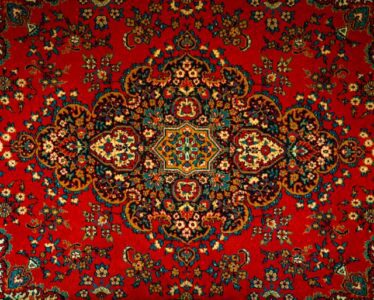
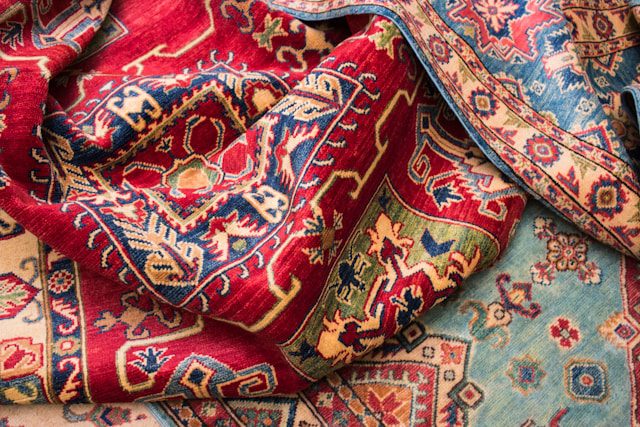
The undisputed king of Iran souvenirs is the Persian carpet. For centuries, the Persian rug has been a symbol of luxury, artistry, and intricate craftsmanship. While large carpets can be difficult to transport, “Qalicheh” (smaller rugs) or Kilims (flat-woven rugs) are perfect for travelers.
Buying a rug in Iran is an education in itself. Each region has its own distinct knotting style, patterns, and color palettes. For example, rugs from Tabriz often feature hunting scenes and use a Turkish knot, while rugs from Nain are famous for their soft blues and beige tones with silk highlights. The nomadic tribes, such as the Qashqai, produce Gabbeh rugs, which are thicker, more abstract, and utilize natural, hand-spun wool dyes.
When selecting a rug as one of your Iran souvenirs, pay attention to the material. Silk rugs are the most expensive and delicate, shimmering under different lighting angles. Wool rugs are more durable and warm, ideal for high-traffic areas. A hand-woven Persian rug is more than just a floor covering; it is a piece of poetry woven into existence, making it the most valuable of all Iran souvenirs.
Minakari (Enameling)
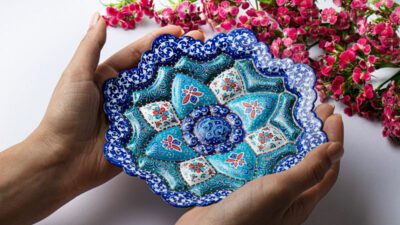
If you walk through the Grand Bazaar of Isfahan, you will undoubtedly be captivated by the dazzling blue hues of Minakari. This art form involves painting and coloring the surface of metals—usually copper—with intricate patterns, which are then baked in a kiln at high temperatures.
Minakari is essentially the art of heaven; the dominant use of azure blue and turquoise is meant to reflect the sky. The most common Iran souvenirs in this category include vases, plates, decorative bowls, and picture frames. The process requires immense precision. The artist creates a base layer of white enamel, fires it, and then meticulously paints birds, flowers, and arabesque designs before firing it again. High-quality Minakari should feel smooth to the touch, without rough edges or cracks in the glaze. It offers travelers a way to take a piece of Persian architecture’s color palette home with them.
Monabat Kari (Wood Carving)
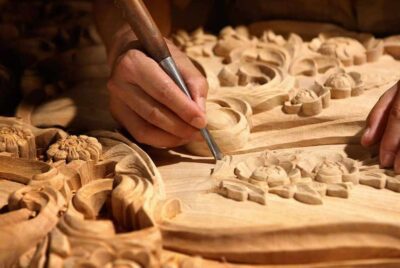
For those who appreciate the warmth and texture of wood, Monabat Kari is one of the most exquisite Iran souvenirs. This art involves carving detailed designs into wood in high or low relief. The woods used are typically walnut, pear, or beech, chosen for their durability and grain.
The imagery in Monabat Kari often includes floral motifs and birds, deeply carved to create a 3D effect. You can find Monabat work on boxes, chess sets, decorative canes, and even furniture. However, for a suitcase-friendly souvenir, jewelry boxes or decorative wooden bowls are ideal choices. The depth of the carving is a sign of quality; the deeper and more detailed the relief, the more skilled the master craftsman was. Unlike other Iran souvenirs that dazzle with color, Monabat impresses with shadow, light, and the raw beauty of natural material.
Khatam Kari (Inlay Work)
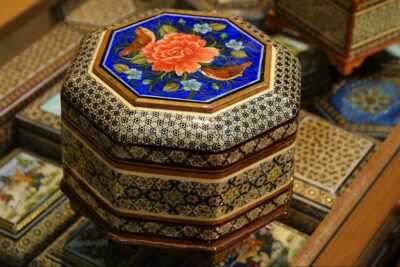
Khatam Kari is the art of geometry. It is one of the most meticulous and time-consuming crafts in Iran, primarily associated with the city of Shiraz and Isfahan. To create Khatam, the artisan bundles thin sticks of wood (ebony, teak, orange wood), brass (for gold color), and camel bone (for white color) into star-shaped patterns. These bundles are then sliced into wafer-thin layers and glued onto the surface of an object.
The result is a surface completely covered in microscopic geometric stars. A high-quality piece of Khatam can have hundreds of distinct pieces within a single square inch. When looking for Iran souvenirs in this category, look for clocks, tissue boxes, pen holders, and chessboards. The finest Khatam has very small, uniform triangles and a smooth, lacquered finish. It is a testament to the Iranian obsession with mathematics and geometry in art.
Ghalamzani (Metal Engraving)
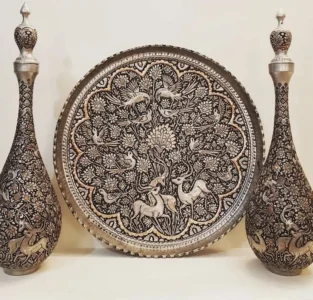
As you walk through the bazaars, you will hear the rhythmic tap-tap-tap of hammers. This is the sound of Ghalamzani, the art of engraving designs onto metals like silver, copper, brass, and gold. This craft has a history spanning thousands of years, dating back to the Sassanid era and beyond.
Ghalamzani artists use chisels and hammers to emboss or engrave complex scenes—ancient hunts, royal courts, or verses from Persian poetry—onto metal trays, vases, and ewers. There are different styles; the Tabriz style usually involves pressing the wrist for engraving, while the Isfahan style relies more on hammer strikes. A silver tray with intricate Ghalamzani work is one of the most sophisticated Iran souvenirs you can buy. It is virtually indestructible and serves as a permanent heirloom.
The Taste of Iran: Edible Souvenirs
While handicrafts decorate your home, edible Iran souvenirs delight your palate. Iranian cuisine is legendary, and the country produces unique ingredients and sweets that are difficult to find of the same quality elsewhere.
Saffron (The Red Gold)
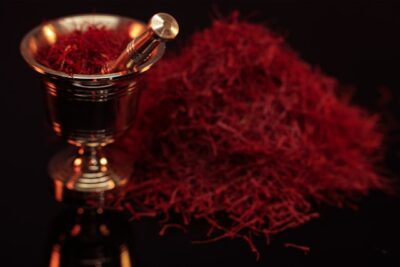
No list of Iran souvenirs is complete without Saffron. Iran produces over 90% of the world’s saffron, and the quality here is unmatched. Known as “Red Gold,” saffron comes from the stigma of the Crocus sativus flower. It takes thousands of flowers to produce just one gram of spice, explaining its high value.
When buying saffron in Iran, looking for the “Sargol” or “Negin” grades is essential; these consist only of the red tips of the threads, which hold the most aroma and color. Avoid threads with yellow roots, as they add weight without flavor. The aroma of Iranian saffron is potent and earthy. It is beautifully packaged in small tins or glass jars, making it one of the easiest Iran souvenirs to pack. A pinch of this spice can transform rice, tea, and desserts, instantly bringing the flavor of Persia to your kitchen.
Sohan (Saffron Brittle)
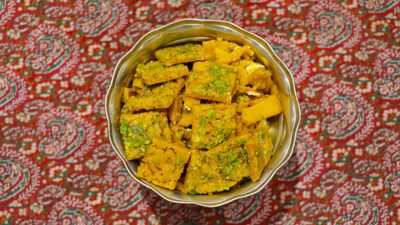
If you have a sweet tooth, Sohan is a must-buy. This traditional Persian saffron brittle originates from the city of Qom. It is made from a mixture of wheat sprout flour, eggs, rose water, sugar, butter, and heavy doses of saffron, topped with pistachios or almonds.
Sohan has a rich, buttery, toffee-like texture that crunches and then melts in your mouth. It is incredibly addictive and pairs perfectly with black tea. It usually comes in decorative tin boxes, which protects the brittle from breaking during travel. As one of the most popular edible Iran souvenirs, you will find it everywhere, but the freshest and most authentic Sohan comes from Qom.
Qavuto
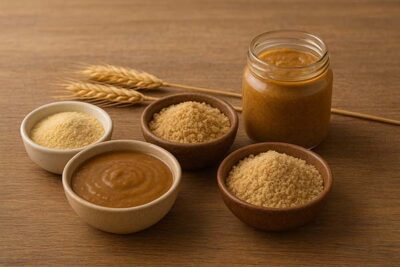
For something truly unique to Iranian culture, look for Qavuto (often called Qavoot). Originating from the Kerman province, this is a powdery mixture that is considered an ancient energy bomb. It is made by grinding a variety of seeds, nuts, and spices—including pistachios, almonds, walnuts, flaxseeds, coriander seeds, cardamom, and sugar.
Qavuto is often eaten by the spoonful or mixed into boiling water or milk to create a nutritious, warm drink. It is traditionally given to women after childbirth to restore strength, but it is enjoyed by everyone as a health tonic. Among Iran souvenirs, Qavuto stands out because it is rarely found outside the country. The “Chehel Giah” (Forty Herbs) variation is particularly famous for its complex flavor profile and health benefits.
A City-by-City Guide to Iran Souvenirs
Because the volume of souvenirs is so high and dependent on local culture, it is helpful to know what to look for in specific major cities. Here is a breakdown of the main hubs and their specialties to help you plan your shopping for Iran souvenirs.
Isfahan: The City of Art
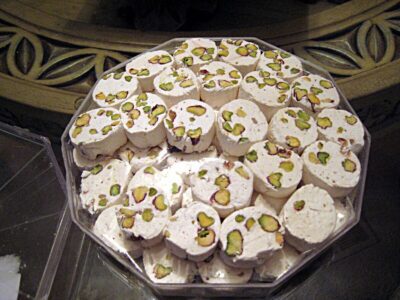
Isfahan is often called “Half of the World,” and its bazaar is the epicenter of Iranian handicrafts.
-
Specialties: This is the best place to buy Minakari (enamel), Khatam Kari (inlay), and Ghalamkar (hand-printed textile tablecloths).
-
Edibles: Isfahan is also famous for Gaz, a white nougat made with rose water, egg whites, and pistachios. It is soft, chewy, and distinct from the brittle Sohan.
Shiraz: The City of Poets
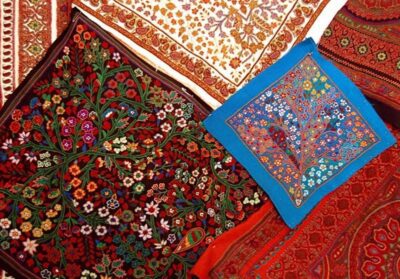
Shiraz is the heart of Persian culture and history.
-
Specialties: Shiraz is famous for its Gabbeh rugs (woven by Qashqai nomads) and high-quality Khatam Kari. You can also find beautiful woodwork.
-
Edibles: Masghati is a translucent, jelly-like sweet made from starch, sugar, saffron, and nuts. It is soft and fragrant, often served with tea. Lemon juice and herbal distillates (like orange blossom water) are also prime Iran souvenirs from this region.
Tabriz: The Carpet Capital
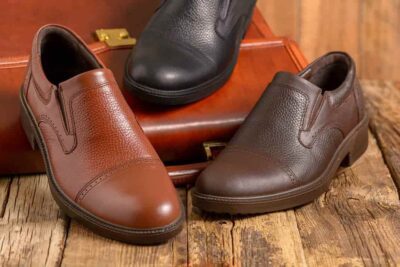
Located in the northwest, Tabriz has one of the oldest covered bazaars in the world, a UNESCO World Heritage site.
-
Specialties: Tabriz is world-renowned for its Persian Carpets. The density of knots in Tabriz rugs is incredibly high, often featuring silk. They also produce excellent leather goods (shoes and bags).
-
Edibles: Ris is a specialized sweet of the region, along with various dried nuts and honeycomb.
Yazd: The Desert Jewel
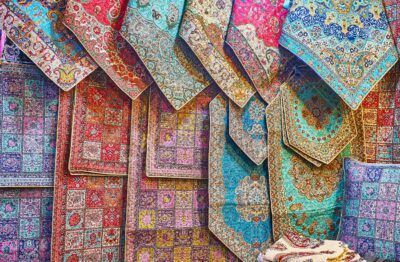
Yazd is known for its windcatchers and Zoroastrian heritage.
-
Specialties: Yazd is famous for Termeh, a luxurious hand-woven cloth made of silk and wool with gold threads, often featuring the Paisley (Boteh) design. It is one of the most elegant textile Iran souvenirs.
-
Edibles: Yazd is the capital of sweets. Baklava (Yazdi style is drier and less syrupy than Turkish styles), Qottab (almond-filled pastry), and Pashmak (Persian cotton candy) are essential buys here.
Mashhad: The Spiritual Hub
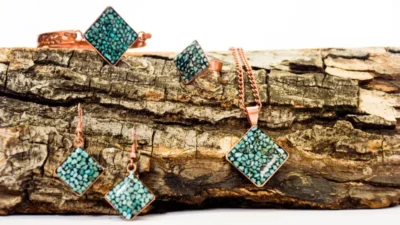
As a major pilgrimage site, Mashhad attracts millions of visitors, making its markets vibrant.
-
Specialties: Mashhad is the global capital of Turquoise (Firoozeh) jewelry. The mines in nearby Nishapur produce the finest turquoise in the world. Stone carving (pots and dishes made from soft stone) is also popular.
-
Edibles: This is the heartland of Saffron. You will find the best prices and highest quality saffron here. Barberries (Zereshk) are also a major export of this region, used to cook Zereshk Polo.
Kerman: The Desert Fortress
Kerman, located in the south-east, has a unique climate that produces specific goods.
-
Specialties: Kerman is famous for Pateh, a style of needlework embroidery done on wool. The colors are vibrant and the patterns are dense. Copper work is also prominent here.
-
Edibles: As mentioned, Qavuto is the signature souvenir of Kerman. Additionally, Kerman produces some of the world’s finest Pistachios.
Rasht and the North (Gilan/Mazandaran)
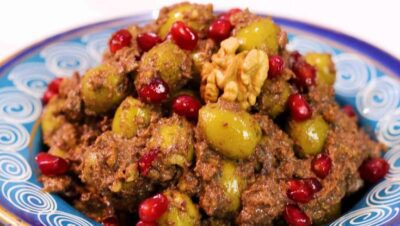
The lush, green northern strip along the Caspian Sea offers a completely different vibe.
-
Specialties: Wicker baskets, bamboo crafts, and wooden products are common due to the forests. Felt products are also traditional Iran souvenirs from this area.
-
Edibles: The north is the culinary capital of Iran. Souvenirs include olive oil, marinated olives (Zeytoon Parvardeh), various fruit leathers (Lavashak), and premium tea grown in Lahijan. Cookies like Koloocheh from Fuman are also iconic.
Practical Tips for Buying Souvenirs
When hunting for Iran souvenirs, bargaining is part of the culture. In the bazaars, prices are rarely fixed. It is expected that you negotiate, but do so with a smile and respect. Usually, offering 70-80% of the initial quoted price is a good starting point.
Furthermore, ensure you understand the customs regulations of your home country regarding bringing back plant products (like saffron or nuts) or soil-based items. For expensive items like carpets or jewelry, always ask for a certificate of authenticity and a receipt to facilitate customs clearance upon departure.
Conclusion
The sheer variety of Iran souvenirs mirrors the richness of the country’s soul. From the rhythmic tapping of the Ghalamzani artist in Isfahan to the fragrant saffron fields of Khorasan, every item tells a story. Whether you choose the intricate geometry of Khatam Kari, the heavenly taste of Sohan, or the warmth of a hand-woven carpet, you are taking home a fragment of a deeply hospitable and artistic culture.
Because the volume of souvenirs is so high, no single trip is enough to see them all. However, by focusing on these key handicrafts and edibles—Rug, Saffron, Minakari, Monabat, Khatam, Ghalamzani, Sohan, and Qavuto—you ensure that your luggage is filled with the very best that Iran has to offer. These objects are not just decorations or snacks; they are bridges between cultures, keeping the memory of your Iranian journey alive forever.